

How to Create Cross-Department Visibility Into Facility Operations
Every department in your organization depends on facility information. Facilities teams manage infrastructure, assets, and maintenance records. Safety and security teams rely on emergency response plans, access control information, CCTV locations, and life safety systems. Capital projects teams need current drawings and utility information before construction begins. Event coordinators need to know what’s happening in a building before scheduling after-hours activities.
Each department has its own responsibilities and often its own software. The problem is that the information those departments manage rarely belongs to just one.

When information doesn’t flow, coordination suffers
A new fire hydrant is installed. Facilities records are updated, but emergency response plans aren’t.
A new CCTV camera is added. Security knows it’s there, but the facilities drawings still show the old layout.
A renovation changes the location of utilities behind a wall. The construction team has the updated drawings, but maintenance technicians continue working from outdated documentation.
None of these situations happen because people aren’t doing their jobs. They happen because information is often created in one place, updated somewhere else, and needed by multiple departments that don’t always have access to the latest version.
As organizations grow, those information silos become harder to manage.
Small communication gaps can create big problems
Not every consequence is an emergency. Many are simply avoidable operational conflicts.
An auditorium is reserved for an evening guest speaker. At the same time, another team has scheduled work to replace the door lock that provides access to the space.
A planned water shutdown is scheduled for a Saturday. Another department has already organized an event in the same building that depends on restrooms, drinking water, or food service.
In both cases, every team did its job correctly. The conflict wasn’t caused by poor planning. It happened because the systems managing those activities weren’t connected, and the people involved had no easy way to see what others had planned.
During an emergency, shared information becomes critical
The stakes are much higher when responding to an emergency.
Facilities staff, security personnel, emergency managers, and first responders all need immediate access to accurate, up-to-date information.
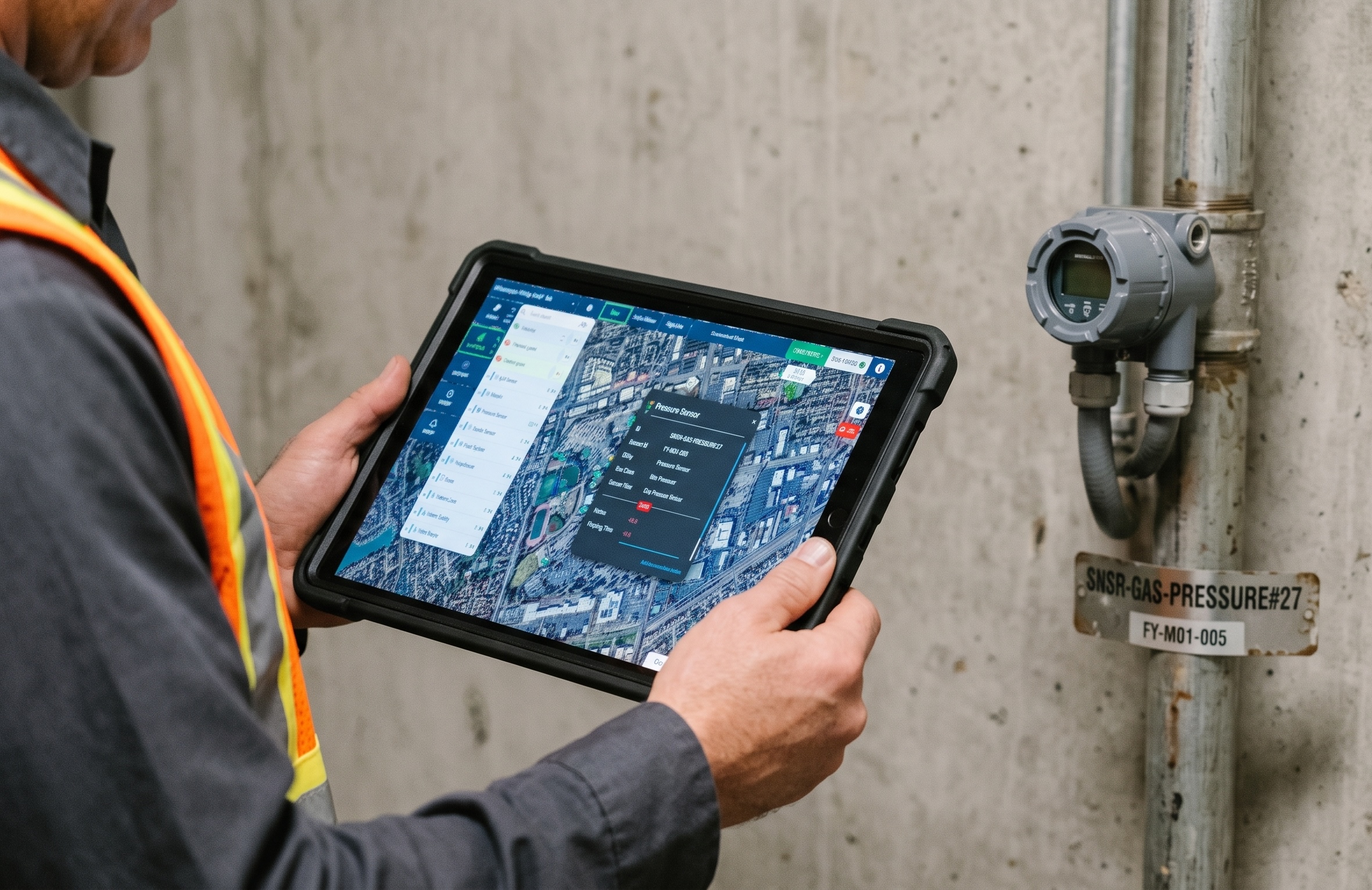
Where are the nearest fire hydrants? Which enevacuation routes are available? Where are theutility shutoffs? What do the nearest CCTV cameras show? Are there live IoT sensor readings that provide additional situational awareness?
When that information is scattered across mulonnected systems, responding quickly becomesmuch more difficult. Even small inconsistencies can delay decisions when every second matters.
A shared view of the facility
Eliminating information silos doesn’t mean replacing every system your organization already uses.
Different departments will always have specialized software designed for their specific responsibilities. Facilities teams may use a CMMS. Security may rely on acnce systems. Capital projects teams work withdrawings and project management software. Event coordinators use scheduling applications.
The challenge isn’t having different systems. It’s making sure they all reflect the same reality.
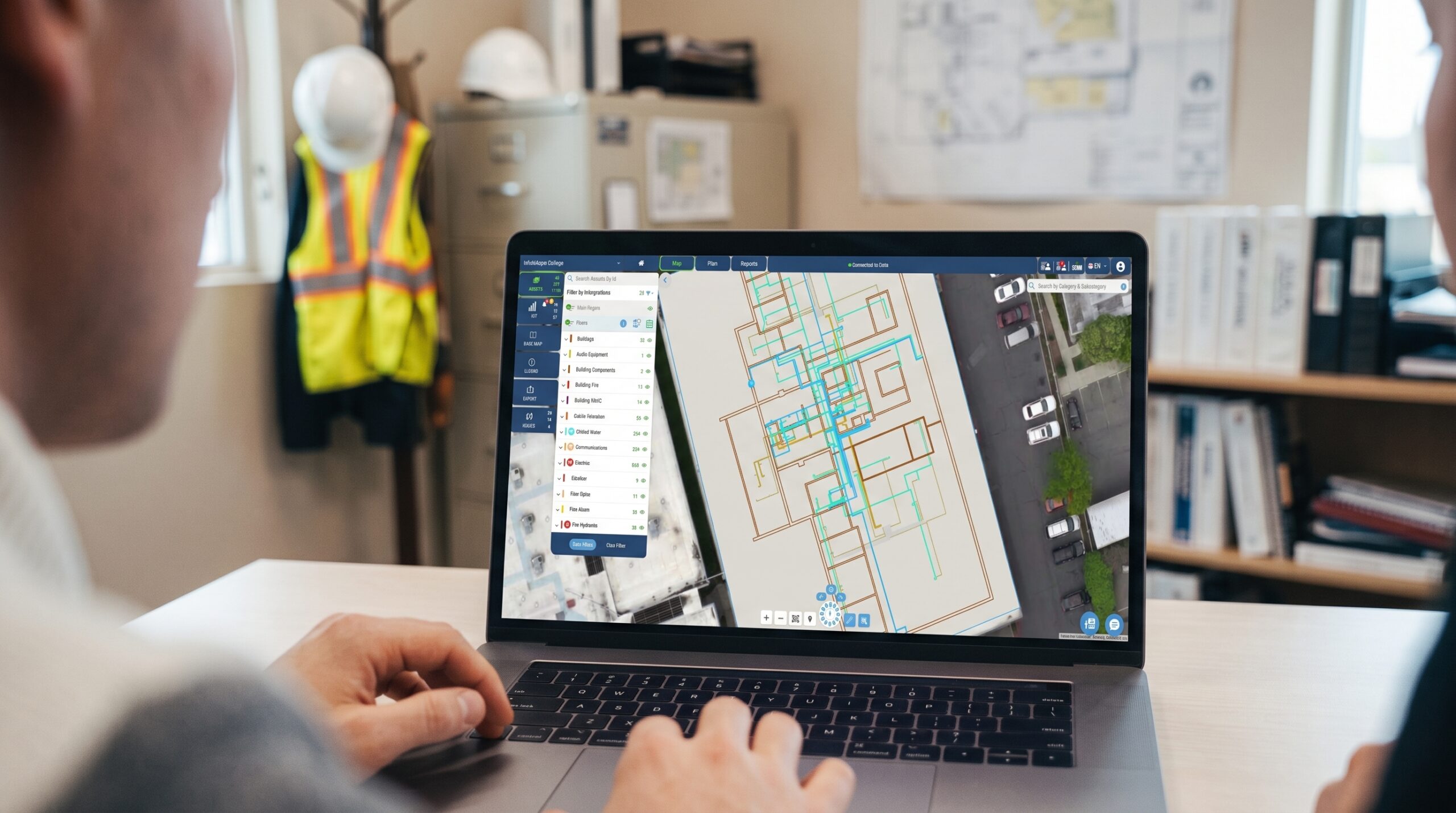
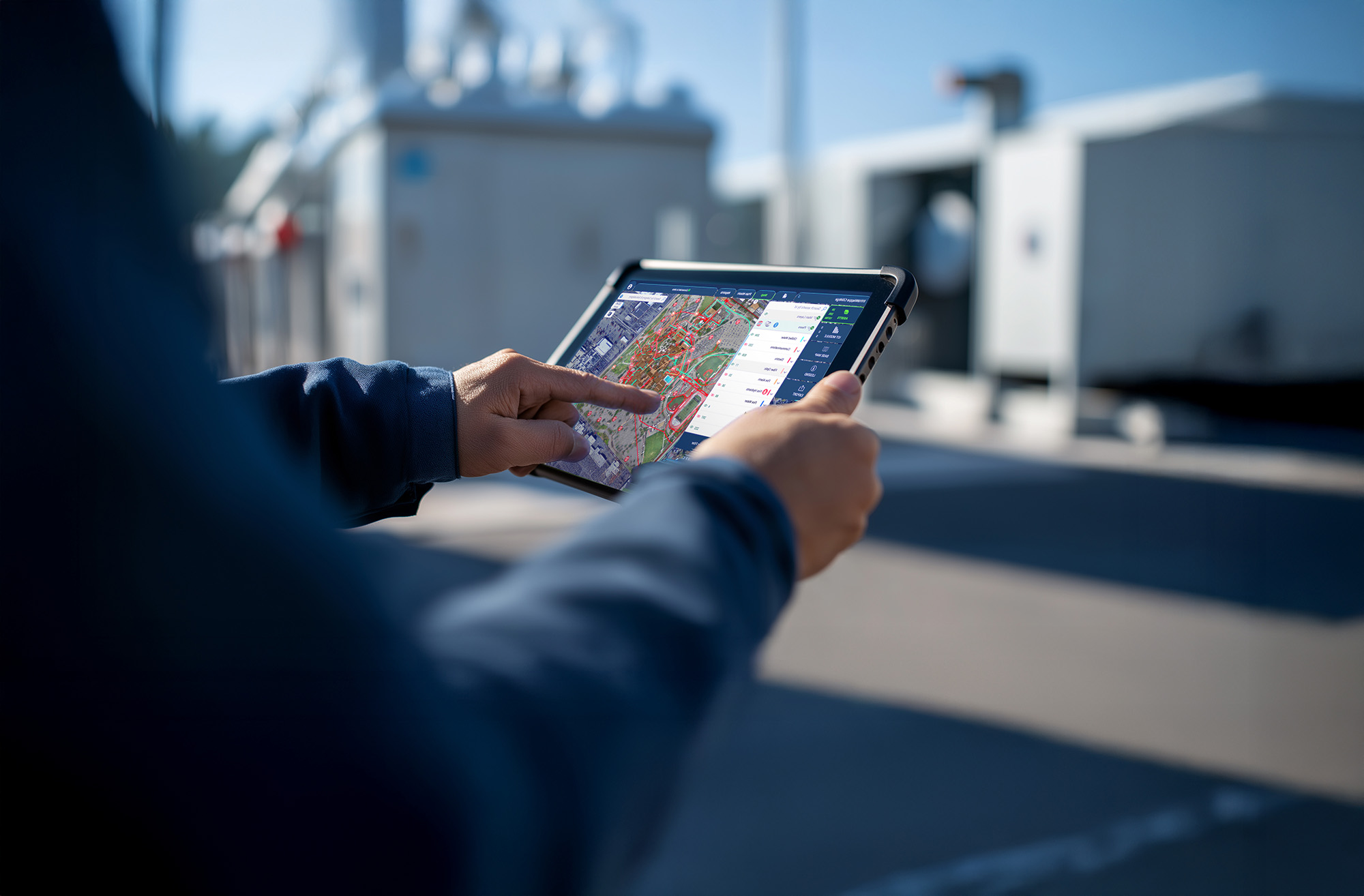
InfraMappa provides a shared operational view by bringing information from across your organization together in the context of the facility itself. Infrastructur, work orders, projects, accessibility routes,issue tracking, IoT sensor data, and other operational information are connected to a live digital twin, giving every department the context it needs to make bette
Information can be shared between InfraMappa allowing departments to continue using thesoftware that best supports their work while maintaining a common understanding of what’s happening, where it’s
happening, and how one activity may affect an
Better coordination starts with shared information
The most effective organizations don’t eliminThey eliminate the information gaps betweenthem.
When every department has access to the same accurate, up-to-date view of the facility, coordination improves,
operational conflicts become easier to prevenities and maintenance to security,construction, and emergency response—can work more effectively together.
That’s exactly what InfraMappa was built to do: connect the information your teams already rely on into a single, shared view of your facility, helping every drmed decisions while continuing to work in thesystems they know best.