

The Work Before the Work Order
Why the smartest facilities teams track issues, not just orders
If you’ve spent time in facilities management, you’ve likely seen a work order management system implementation or two. There’s the enthusiasm for the initial rollout, the training, the push to get everyone using it. Then adoption slowly erodes under the weight of data entry, workarounds multiply, and eventually someone proposes replacing it. The cycle repeats.
These systems aren’t badly built. They just start in the wrong place.
Work orders start too late
Work order management assumes you already have answers. Answers like which asset, which building, which floor, and what needs to be done. But that’s the end of the process, not the beginning. Every problem starts as something someone noticed — a flickering stairwell light, an odd smell near a mechanical room, water where it shouldn’t be. At this stage, the cause and the fix are unknown. Traditional systems have no place to capture this initial information, so observations live in hallway conversations, unread emails, and phone calls that begin with, “It was on the third floor of Building C… I think it was the West hallway…?”
Issues and tasks: two separate concepts
InfraMappa separates two things that work order systems blur together: issues and tasks.
Issue — Something observed but not yet diagnosed.
Task — The work that follows, such as an investigation, a repair, or a scheduled inspection.
The relationship runs both ways: one water leak might generate three tasks—find the source, shut off the supply, and make the repair—while one tripped breaker might explain five separate issues reported across a building.
Once you see facility problems this way, it’s clear why many observations never needed a formal work order at all. And why forcing every observation through one creates overhead nobody wants.
The map does the paperwork
Here is the sneaky advantage of using a map-based system like InfraMappa: location is no longer a data-entry field.
When an issue is reported in InfraMappa, it is pinned to an exact spot on your facility map. Your team instantly sees the assets in the vicinity, and the system surfaces likely sources automatically. The person reporting the issue doesn’t have to diagnose anything. The person responding doesn’t have to decode “the AC on the right, not the left, second floor, past the double doors.”
One photo. A couple of taps. The right person is notified.
Your community is already patrolling
One facilities director told us the only way he learns about problems is by personally walking the campus, so he makes time to do it himself. Admirable. Not scalable.
Meanwhile, hundreds of students, residents, and staff walk past every corner of that facility every day. They notice things faster than your team can. InfraMappa turns that community into your eyes and ears: anyone can report an issue from the app in seconds, and it lands with the right person. No phone tag, no email purgatory, and no vague descriptions.
The bigger your facility, the bigger this multiplier becomes.
Simple enough to actually stick
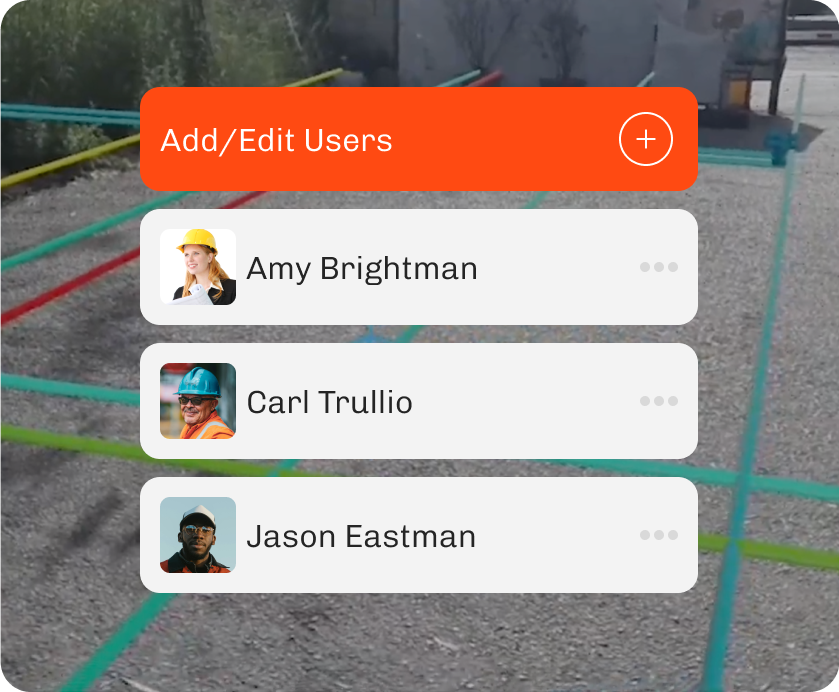
Complexity kills adoption. When only one person knows how to assign work, the entire team queues behind a single bottleneck. InfraMappa keeps tasking deliberately light. Reassignment takes one click, every task has a primary and secondary assignee so nothing sits unattended, priorities can be reordered as reality changes, and recurring work is entered once and resurfaces on schedule.
No modules you won’t use. No rules to configure before getting started.
The bottom line
If you run a large team with high work volume, a heavyweight work order system may genuinely earn its keep—and issue tracking makes it better (not obsolete) by feeding it cleaner information sooner. But for most facilities teams, the overhead outweighs the benefit. The problem isn’t the work order. It’s everything that happens before you know what to enter into one. Start with the observation, the location, and the decision. Then decide whether a work order is needed at all.
Every work order starts as something someone noticed. The question is whether your system is equipped to listen.